Suntron Plastics
ZrO₂ & Si₃N₄ Full Ceramic Bearings | Zirconia & Silicon Nitride
ZrO₂ & Si₃N₄ Full Ceramic Bearings | Zirconia & Silicon Nitride
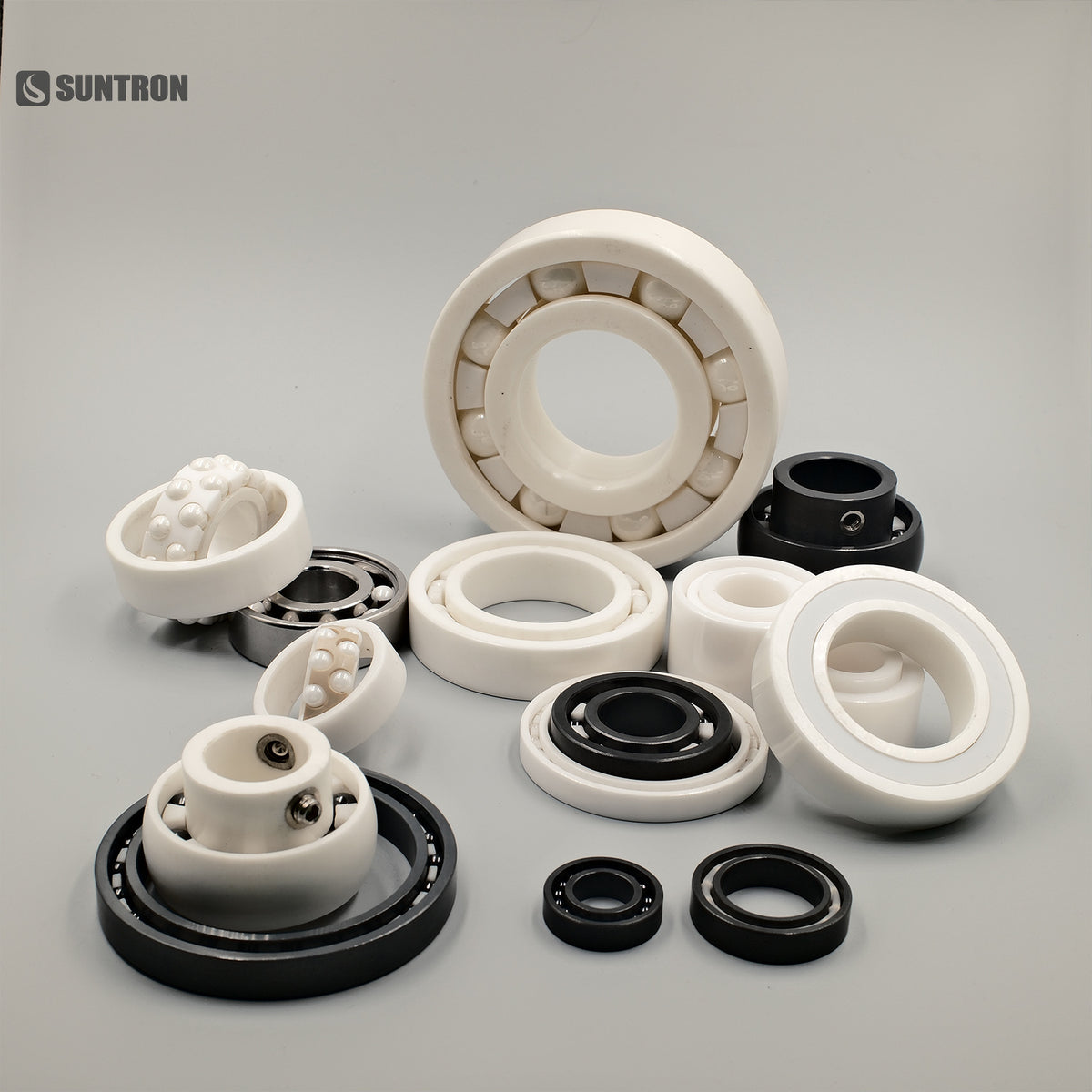
ZrO₂ & Si₃N₄ Ceramic Bearings
SUNTRON supplies full ceramic bearings and custom ceramic bearing solutions manufactured from ZrO₂ zirconiaand Si₃N₄ silicon nitride for demanding industrial applications.
Compared with conventional metal bearing materials, engineering ceramics offer a combination of corrosion resistance, electrical insulation and non-magnetic properties. Different ceramic materials, bearing structures and cage configurations can be selected according to the actual operating environment.
Our ceramic bearing range includes standard and non-standard designs for semiconductor equipment, electronics manufacturing, chemical processing, cleanroom systems, precision machinery and industrial automation.
ZrO₂ Zirconia Ceramic Bearings
ZrO₂ (zirconia) is a practical ceramic bearing material for applications requiring excellent corrosion resistance and good mechanical performance.
Typical applications include wet-process equipment, chemical environments, precision machinery and applications where conventional steel bearings may be unsuitable.
Si₃N₄ Silicon Nitride Ceramic Bearings
Si₃N₄ (silicon nitride) combines high hardness with lower density and is widely used for demanding bearing applications.
It is particularly suitable when the application places greater emphasis on rotational performance, wear resistance and demanding operating conditions.
Full Ceramic & Custom Configurations
Available configurations include:
- Full ZrO₂ ceramic bearings
- Full Si₃N₄ ceramic bearings
- Ceramic ball bearings
- Self-aligning ceramic bearings
- Special inner and outer ring profiles
- Alternative cage/retainer structures
- Hybrid material configurations
- Custom dimensions and non-standard bearings
Why Choose Ceramic Bearings?
Corrosion Resistance
Suitable for many wet, chemical and corrosive operating environments.
Electrical Insulation
Ceramic bearing components provide electrical insulation compared with conventional steel components.
Non-Magnetic Properties
Suitable for applications where magnetic interference needs to be minimized.
Wear Resistance
Hard ceramic surfaces provide excellent wear characteristics for demanding motion applications.
Material Selection
Choose between ZrO₂ zirconia and Si₃N₄ silicon nitride according to operating conditions.
Custom Engineering
Non-standard dimensions, structures and material combinations can be manufactured according to drawings or samples.
Typical Applications
Semiconductor Equipment / Electronics Manufacturing / Cleanroom Equipment / Chemical Processing / Wet Process Equipment / Industrial Automation / Precision Machinery / Vacuum Equipment / Special-Purpose Machinery
ZrO₂ or Si₃N₄ — Which Should You Choose?
The correct ceramic material depends on the application rather than simply choosing one material as “better.”
ZrO₂ Zirconia: a strong option where corrosion resistance and general industrial ceramic-bearing performance are priorities.
Si₃N₄ Silicon Nitride: often selected where lower density, hardness and demanding rotational performance are important.
For non-standard applications, provide the bearing dimensions, load, speed, temperature and operating environment, and we can evaluate the appropriate configuration.
FAQ
1. Do you supply both ZrO₂ and Si₃N₄ ceramic bearings?
Yes. SUNTRON supplies zirconia and silicon nitride ceramic bearing configurations for different industrial applications.
2. What is the difference between ZrO₂ and Si₃N₄?
ZrO₂ provides excellent corrosion resistance and good mechanical properties, while Si₃N₄ has lower density, high hardness and characteristics suited to demanding rotational applications.
3. Do you offer full ceramic bearings?
Yes. Full ceramic and hybrid material configurations are available depending on the bearing design.
4. Can ceramic bearings operate without lubrication?
Some configurations can be suitable for dry-running or low-lubrication conditions. Suitability depends on load, speed, temperature and bearing structure.
5. Are ceramic bearings suitable for wet and chemical environments?
Ceramic materials provide excellent corrosion resistance, but compatibility should be evaluated against the actual chemicals and operating temperature.
6. Can you make non-standard ceramic bearings?
Yes. Custom dimensions and special structures can be manufactured according to drawings, samples or application requirements.
7. Which industries use ceramic bearings?
Common applications include semiconductor, electronics, chemical processing, cleanroom, automation and precision machinery equipment.
8. What information is needed for a quotation?
Please provide ID, OD, width, quantity, preferred ceramic material and application. Load, speed, temperature and operating environment are useful for technical evaluation.